
Article Plan: The Human Animal & Sapiens ― A Comparative Overview
Exploring two seminal works—Harari’s Sapiens and Morris’ The Human Animal—this article dissects humanity’s journey,
from animalistic origins to modern complexities, utilizing PDF resources.
This comparative analysis delves into the core of human existence, examining our species through the distinct, yet complementary, perspectives offered by Yuval Noah Harari’s Sapiens: A Brief History of Humankind and Desmond Morris’ The Human Animal. Harari provides a sweeping, macro-historical narrative, questioning the very foundations of our beliefs and societal structures, readily available in various formats including PDF versions online.
Morris, conversely, adopts a micro-biological approach, grounding human behavior in our animalistic instincts and evolutionary past. His work, also accessible as a PDF, meticulously details the biological roots of gestures, aggression, and sexual selection. By juxtaposing these two viewpoints, we aim to achieve a more holistic understanding of Homo sapiens – acknowledging both our constructed realities and our inherent animal nature. This exploration considers how these insights remain relevant in our rapidly changing world.
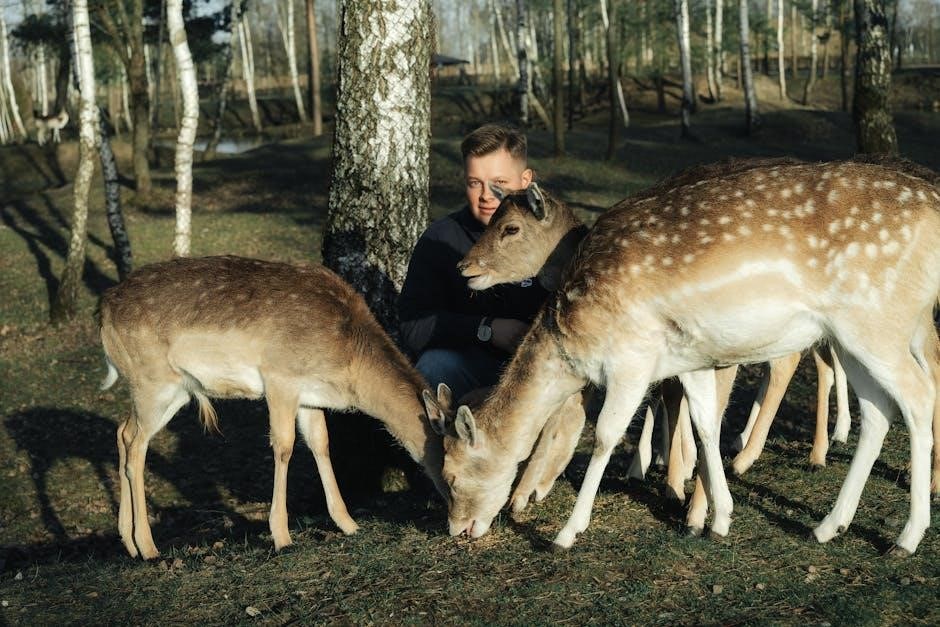
Yuval Noah Harari’s “Sapiens: A Brief History of Humankind”
Harari’s groundbreaking work examines the history of Homo sapiens, from the Cognitive Revolution to the present, questioning the narratives shaping our species’ dominance.
The Cognitive Revolution: The Dawn of Imagination
Around 70,000 years ago, Homo sapiens underwent a pivotal shift – the Cognitive Revolution. This wasn’t a physical change, but a neurological one, enabling complex thought, language, and crucially, the capacity for shared myths and fictions. Harari argues this ability to believe in collective stories—nations, religions, money—is what allowed sapiens to cooperate in large numbers, surpassing other human species.
This imaginative leap wasn’t about truth, but about usefulness. These fictions, though not objectively real, provided a common ground for cooperation, driving societal development. The ability to discuss things that don’t exist, like gods or future outcomes, fundamentally altered our species’ trajectory, setting the stage for dominance.
The Agricultural Revolution: A Faustian Bargain?
Harari provocatively frames the Agricultural Revolution not as progress, but as a “trap” – a Faustian bargain. While it allowed for population growth and settled communities, it simultaneously increased human workload and vulnerability. Early farmers faced a less diverse diet, increased risk of famine, and were more susceptible to disease due to denser living conditions.
The shift to agriculture wasn’t a conscious choice for a better life, but rather a gradual commitment to a demanding lifestyle. Humans became increasingly reliant on a handful of domesticated plants and animals, sacrificing freedom and dietary variety for increased caloric output. This revolution, while foundational, arguably diminished the overall quality of life for many early agriculturalists.
The Unification of Humankind: Money, Empires, and Religion
Harari argues that three universal orders – money, empires, and religion – were crucial in unifying humankind. Money, as a universally accepted medium of exchange, fostered trust and facilitated large-scale cooperation beyond kinship groups. Empires, through conquest and administration, imposed common political and cultural frameworks.
Religion, particularly those with universalist aspirations, provided shared narratives and moral codes, transcending local boundaries. These systems weren’t necessarily benevolent; they often involved violence and oppression. However, they created imagined realities that enabled millions to cooperate effectively, laying the groundwork for a globally interconnected world. These forces diminished local cultures, creating a more homogenous, yet complex, global society.
Science, Capitalism, and the Modern Era
Harari posits that the marriage of science and capitalism propelled the modern era, fostering unprecedented growth and transformation. Science offered the knowledge and technology, while capitalism provided the economic incentive for innovation and expansion. This pairing fueled the Age of Exploration, the Industrial Revolution, and continues to drive technological advancements today.
Crucially, this progress wasn’t inherently positive. It led to ecological damage, social inequalities, and the potential for devastating warfare. The belief in progress, a core tenet of modern thought, is itself a shared fiction, yet one that profoundly shapes human behavior and societal development. This era marks a shift towards a future increasingly defined by human power and its consequences.

Desmond Morris’ “The Human Animal”
Morris’s work, available as a PDF, explores the biological underpinnings of human behavior, revealing animalistic instincts still present in modern society and gestures.
The Biological Roots of Human Behavior
Desmond Morris’s The Human Animal, readily accessible as a PDF, fundamentally argues that much of human behavior isn’t culturally constructed, but deeply rooted in our evolutionary past. He posits that instincts honed during our primate ancestry continue to influence modern actions, often subconsciously.
The book meticulously examines behaviors like territoriality, aggression, courtship rituals, and even play, demonstrating their parallels in other animal species. Morris emphasizes the significance of gesture and body language, highlighting how these non-verbal cues are remnants of our animal heritage. He doesn’t dismiss culture, but frames it as a layer built upon this biological foundation, shaping but not entirely overriding our innate predispositions. Understanding these roots, Morris suggests, is crucial for comprehending the complexities of human interaction.
Animalistic Instincts in Modern Humans
Morris’s The Human Animal, available in PDF format, compellingly illustrates how primal instincts manifest in contemporary society. Despite layers of civilization, remnants of our animalistic past persist. For example, territorial displays are evident in property ownership and social hierarchies, while aggression surfaces in competition and conflict.
Courtship rituals, though refined, still echo mating dances observed in the animal kingdom. Even seemingly innocuous behaviors like hoarding or seeking status are linked to survival mechanisms from our evolutionary history. The PDF details how these instincts aren’t necessarily negative; they’re simply fundamental drives that shape our actions, often operating beneath conscious awareness, influencing everything from consumerism to political behavior.
The Role of Gesture and Body Language
As detailed in Desmond Morris’s The Human Animal (accessible in PDF form), non-verbal communication forms a crucial, often subconscious, layer of human interaction. Gesture and body language aren’t learned behaviors, but rather evolved signals rooted in our primate ancestry.
Displays of dominance, submission, and attraction are communicated through posture, facial expressions, and physical proximity. The PDF highlights how these signals predate language, serving as essential tools for social cohesion and survival. Even subtle cues, like mirroring another’s movements, foster rapport. Understanding these ingrained patterns provides insight into the unspoken dynamics governing human relationships and social structures.
Sexual Behavior and Mate Selection
Desmond Morris’s The Human Animal, readily available as a PDF, delves into the biological underpinnings of human sexual behavior and mate selection. These aren’t solely cultural constructs, but are deeply influenced by evolutionary pressures. The book explores how displays of health, fertility, and genetic fitness subconsciously drive attraction.
Mate selection strategies, differing between sexes, are rooted in maximizing reproductive success. Male displays of status and resources, and female assessments of those qualities, are presented as evolved behaviors. The PDF details how courtship rituals, jealousy, and pair-bonding all have biological origins, shaping modern relationships and societal norms.

Comparing and Contrasting the Two Perspectives
Harari offers a broad historical sweep, while Morris, via his PDF, provides a focused biological lens, examining instincts and behaviors shaping human societies.
Harari: A Macro-Historical View
Yuval Noah Harari’s Sapiens: A Brief History of Humankind presents a sweeping narrative of human history, beginning with the Cognitive Revolution. He argues that Homo sapiens rose to dominance not through individual superiority, but through our unique capacity for collective belief in shared fictions – things like religion, money, and nations.
These “imagined realities” enabled large-scale cooperation, distinguishing us from other human species. Harari’s work, accessible through various sources including PDF formats, questions the direction of history and whether progress equates to happiness. He probes the impact of the Agricultural Revolution as a potential “trap,” and analyzes the rise of science and capitalism as dominant ideologies. His perspective is distinctly macro-historical, focusing on large-scale trends and their consequences.
Morris: A Micro-Biological Focus

Desmond Morris’ The Human Animal adopts a radically different approach, grounding human behavior in our biological and evolutionary past. Unlike Harari’s broad historical scope, Morris delves into the “micro” level – examining instincts, gestures, and sexual behaviors as remnants of our animal ancestry.
His work, often found in PDF versions detailing observations of human behavior, emphasizes territoriality, aggression, and the importance of play. Morris argues that many modern human actions are rooted in animalistic drives, manifested in subtle ways like body language and mate selection. He presents a sociobiological perspective, suggesting that understanding our biological roots is crucial to understanding ourselves.
Overlapping Themes: The Power of Narrative
Despite their differing approaches, both Harari and Morris acknowledge the immense power of shared narratives in shaping human society. Harari highlights how “fiction” – beliefs in gods, nations, and money – enabled large-scale cooperation, propelling Homo sapiens to dominance.
Morris, while focusing on biological drives, implicitly recognizes that these drives are often channeled and expressed through culturally constructed narratives. The PDF versions of The Human Animal reveal how rituals and social structures, essentially narratives, regulate behaviors like aggression and reproduction. Both authors, therefore, converge on the idea that humans are uniquely capable of creating and believing in stories that profoundly impact our collective destiny.
The Impact of Evolution on Human Society
Morris’s The Human Animal, readily available as a PDF, directly addresses how our evolutionary past continues to shape contemporary human behavior. He argues that many seemingly modern social patterns – territoriality, dominance hierarchies, courtship rituals – are rooted in animalistic instincts honed over millennia.
Harari, while taking a broader historical view, doesn’t dismiss evolution’s influence. He acknowledges that Homo sapiens’ cognitive abilities evolved to solve problems faced by hunter-gatherers, impacting our capacity for cooperation and storytelling. Both authors, therefore, demonstrate that understanding our evolutionary origins is crucial for interpreting the complexities of human society, even in the 21st century.

Key Arguments of “Sapiens” in Detail
Harari posits that Sapiens’ dominance stems from our unique ability to create and believe in shared fictions, enabling large-scale cooperation, as explored in the PDF.
The Fiction That Drives Cooperation
Yuval Noah Harari argues that Homo sapiens rose to prominence not because of individual capabilities, but through a remarkable capacity for collective belief. This centers on the creation of “intersubjective realities” – fictions like nations, money, human rights, and religions. These aren’t objectively real, yet they powerfully shape human behavior and facilitate cooperation on a massive scale.
The PDF resources highlight how these shared narratives allowed early Sapiens to overcome the limitations of small, kin-based groups. Trust, built upon these fictions, enabled collaboration in hunting, gathering, and eventually, the development of complex societies. Without believing in the same stories, large-scale human organization would be impossible, as detailed in Harari’s work.
This concept contrasts with the purely biological drives explored in Morris’s work, suggesting culture and imagination are equally, if not more, crucial to understanding human success.
The Future of Homo Sapiens: Homo Deus
Harari’s Homo Deus extends the historical analysis of Sapiens, contemplating humanity’s potential trajectory. He posits that, having overcome famine, plague, and war, Homo sapiens now seeks immortality, happiness, and divinity – becoming “Homo Deus.” This pursuit is fueled by advancements in biotechnology and artificial intelligence.
The PDF resources suggest this ambition isn’t without peril. The quest for enhanced capabilities could lead to a new class divide, with “upgraded” humans potentially rendering “ordinary” humans obsolete. Furthermore, the very narratives that once united us may fracture as objective data increasingly challenges subjective beliefs.
Considering Morris’s insights into inherent human drives, the future may see a clash between engineered aspirations and deeply rooted biological imperatives, shaping a complex and uncertain destiny.

Key Arguments of “The Human Animal” in Detail
Morris meticulously details animalistic instincts—territoriality, aggression, and sexual behaviors—present in humans, explored through gesture and body language in the PDF.
Territoriality and Aggression
Desmond Morris’s work, accessible in PDF format, profoundly examines how deeply ingrained territoriality and aggression are within human behavior. He argues these aren’t simply learned responses, but remnants of our animal ancestry, manifesting in modern society through property ownership, national borders, and even personal space.
Aggression, Morris posits, isn’t solely destructive; it served evolutionary purposes, securing resources and mates. While societal norms attempt to suppress overt aggression, it frequently surfaces in subtle forms – competition, dominance displays, and verbal conflict. The PDF details how these instincts, though modified, continue to shape human interactions, influencing everything from workplace dynamics to international relations. Understanding these biological roots is crucial for interpreting contemporary behavior.
The Importance of Play and Exploration
According to Desmond Morris’s “The Human Animal,” readily available as a PDF, play and exploration aren’t frivolous activities, but vital components of human development and learning. Rooted in our animal heritage, these behaviors allow for skill acquisition, social bonding, and environmental adaptation.
Exploration fuels curiosity and innovation, driving us to understand and manipulate our surroundings. Play, particularly during childhood, facilitates the development of cognitive and motor skills, preparing individuals for future challenges. The PDF highlights how even adult activities like hobbies and travel represent extensions of this innate exploratory drive. These behaviors aren’t merely recreational; they are fundamental to our species’ success.

Criticisms and Limitations
Both works face scrutiny; Harari’s determinism is questioned, while Morris’ sociobiological approach, explored in the PDF, can oversimplify complex human behaviors.
Criticisms of Harari’s Historical Determinism
Harari’s sweeping narratives in Sapiens, accessible through resources like the PDF versions of his work, are often criticized for a perceived historical determinism. Critics argue that his grand theories, while compelling, sometimes downplay the role of contingency, individual agency, and unpredictable events.
The emphasis on overarching narratives – the Cognitive, Agricultural, and Scientific Revolutions – can overshadow the nuances and complexities of specific cultures and historical periods. Some scholars contend that attributing such significant shifts to singular causes risks oversimplification.
Furthermore, the notion of a linear progression of history, culminating in Homo Deus, is challenged as potentially Eurocentric and neglecting alternative trajectories of human development. The PDF versions allow for closer examination of these arguments.
Limitations of Morris’ Sociobiological Approach
Desmond Morris’ The Human Animal, readily available as a PDF, offers a fascinating exploration of human behavior through a sociobiological lens. However, this approach isn’t without limitations. Critics point to the risk of genetic determinism – the idea that our behaviors are solely dictated by our genes – potentially minimizing the impact of culture, learning, and individual choice.
The focus on animalistic instincts, while insightful, can sometimes present a reductionist view of complex human motivations. Attributing behaviors like aggression or territoriality solely to evolutionary roots overlooks the significant role of social and environmental factors.
Moreover, applying animal models to human behavior requires careful consideration, as humans possess unique cognitive abilities and cultural systems. The PDF format allows for critical assessment of these inherent limitations.
Relevance in 2026: Contemporary Applications
Both texts, accessible as a PDF, illuminate current trends—AI’s impact on narrative, societal shifts, and understanding human behavior in a rapidly evolving world.
Understanding Current Societal Trends
Examining Sapiens and The Human Animal, particularly through readily available PDF versions, provides crucial insight into today’s societal landscape. Harari’s exploration of fictional narratives driving cooperation explains the power of social media and political polarization. Morris’s work, detailing ingrained animalistic instincts, clarifies aggressive behaviors and territoriality observed in online spaces and geopolitical conflicts.
Furthermore, understanding mate selection strategies, as outlined by Morris, sheds light on modern dating trends and societal pressures. The books collectively reveal how deeply rooted biological factors interact with culturally constructed narratives, shaping contemporary issues like consumerism, political ideologies, and the pursuit of happiness. Accessing these insights via PDF format facilitates wider dissemination and critical analysis.
Implications for Artificial Intelligence and the Future
Considering Harari’s projections in Sapiens, alongside Morris’s biological framework (accessible in PDF form), is vital when contemplating AI’s future. If human cooperation is built on shared fictions, can AI be programmed with ethical narratives? Morris’s insights into inherent aggression raise concerns about AI weaponization and control.
Moreover, understanding human drives – territoriality, mate selection – informs the design of AI companions and the potential for manipulation. As AI evolves, mirroring human cognitive abilities, these texts offer a cautionary lens. Will AI surpass Homo sapiens, as Harari suggests, or will our animalistic limitations constrain its development? The PDF resources provide essential context for navigating this complex future.

A Holistic Understanding of Humanity
Ultimately, synthesizing Harari’s sweeping historical narrative with Morris’s grounded biological perspective—both readily available in PDF format—reveals a multifaceted understanding of Homo sapiens. We are creatures shaped by both cultural constructs and primal instincts.
Harari illuminates the power of collective belief, while Morris anchors us in our animal origins. This duality explains our capacity for both extraordinary cooperation and destructive conflict. Examining these texts together fosters a more nuanced view, acknowledging the inherent contradictions within the human experience. The PDF resources serve as a powerful tool for continued exploration and self-reflection.